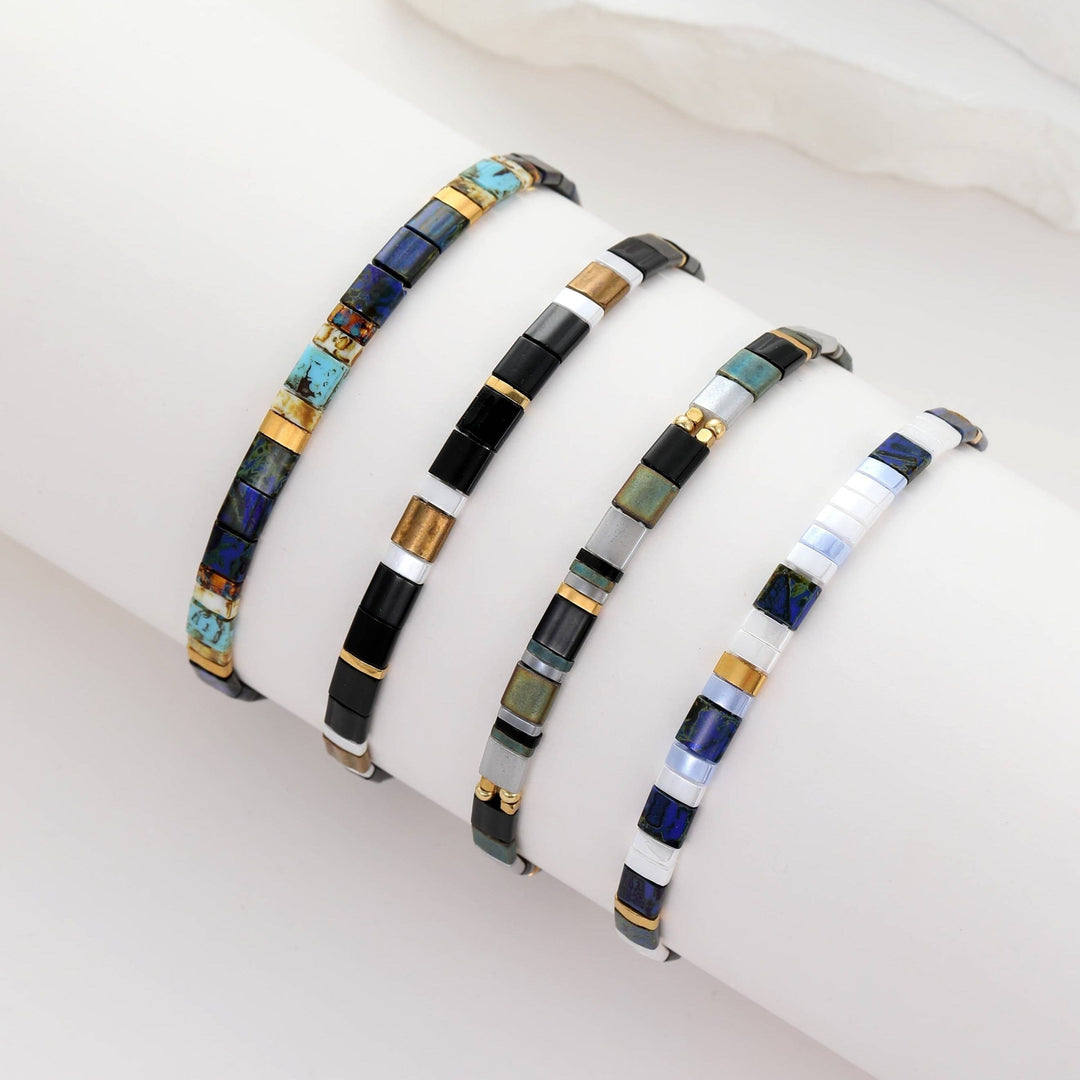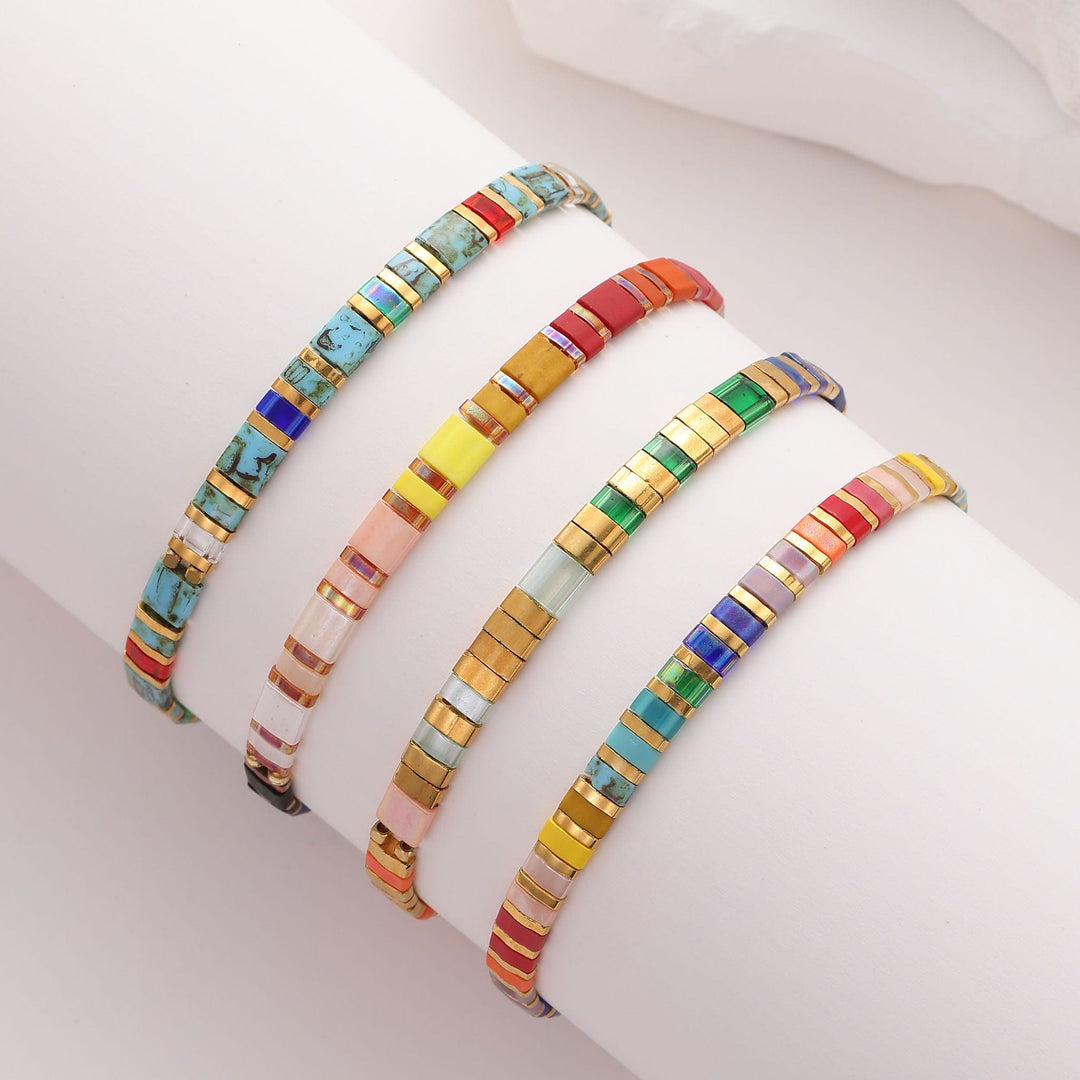




November Birthstone Color Guide: Topaz & Citrine Miyuki Bead Bracelets for 2026
November has two birthstones, topaz and citrine, and together they give late autumn its warmest jewelry palette: honey gold, burnt orange and the pinkish amber of Imperial topaz. The GIA (2026) notes that topaz comes in a rainbow of colours while citrine is prized for its yellow and orange hues, which is exactly why both translate so well into glass. At Koss Design, our Paris studio reads November through two materials: 24k gold-plated Miyuki beads for citrine's glow, and amber, peach and ice-blue glass for the many faces of topaz. Last November, sets made up roughly half of the units among our 40 best-selling pieces on kossdesign.com, so this guide is built around how people really shop the month. Below, we map both stones to bead palettes, explain why citrine joined the list in 1952, share how to style them, and suggest gifts for Scorpio and Sagittarius birthdays.
What are November's birthstones and their colors?
November's birthstones are topaz and citrine. According to the GIA (2026), topaz ranges from colourless and light blue to yellow, orange, pink, violet and, very rarely, red, with the pinkish-orange Imperial topaz the most prized. Citrine is the transparent yellow to brownish-orange variety of quartz, and its name is believed to come from the French word citron, lemon. For a Miyuki bead bracelet, that gives November a clear colour story: golden yellow, amber, cognac and soft peach, with icy blue topaz as the cool exception. Both stones are relatively affordable as gems, but a bead interpretation lets you wear the tone every day without worrying about chips. After October's iridescent opal and tourmaline palette, November is the month Parisian bead jewelry turns fully golden.
Why does November have two birthstones?
Because the official list changed in the middle of the twentieth century. The first standardised American birthstone list, adopted by the National Association of Jewelers in 1912, gave November to topaz alone. In 1952, the industry body now known as Jewelers of America revised the list and added citrine as a second November stone, giving buyers a more accessible golden option alongside topaz. The two had already been confused for centuries: GIA records that people credited citrine with the same calming powers as topaz simply because they looked alike. Today, most citrine on the market comes from heat-treated amethyst. For us at Koss Design, the dual listing is useful. Topaz brings variety, from blue to pink, and citrine anchors the month in one warm, readable colour that suits handmade French jewelry from November through the holidays.
How do you get a citrine glow from Miyuki beads?
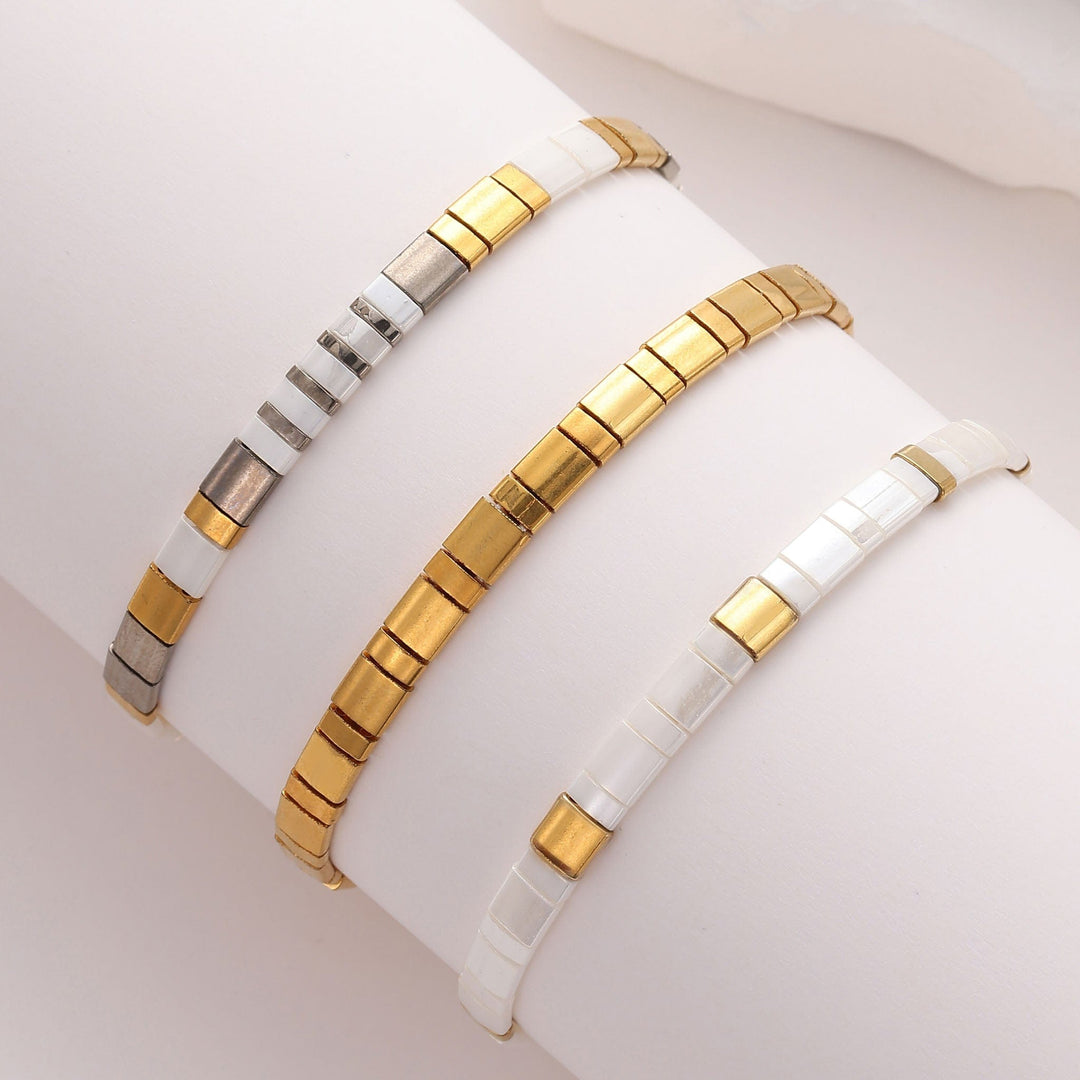
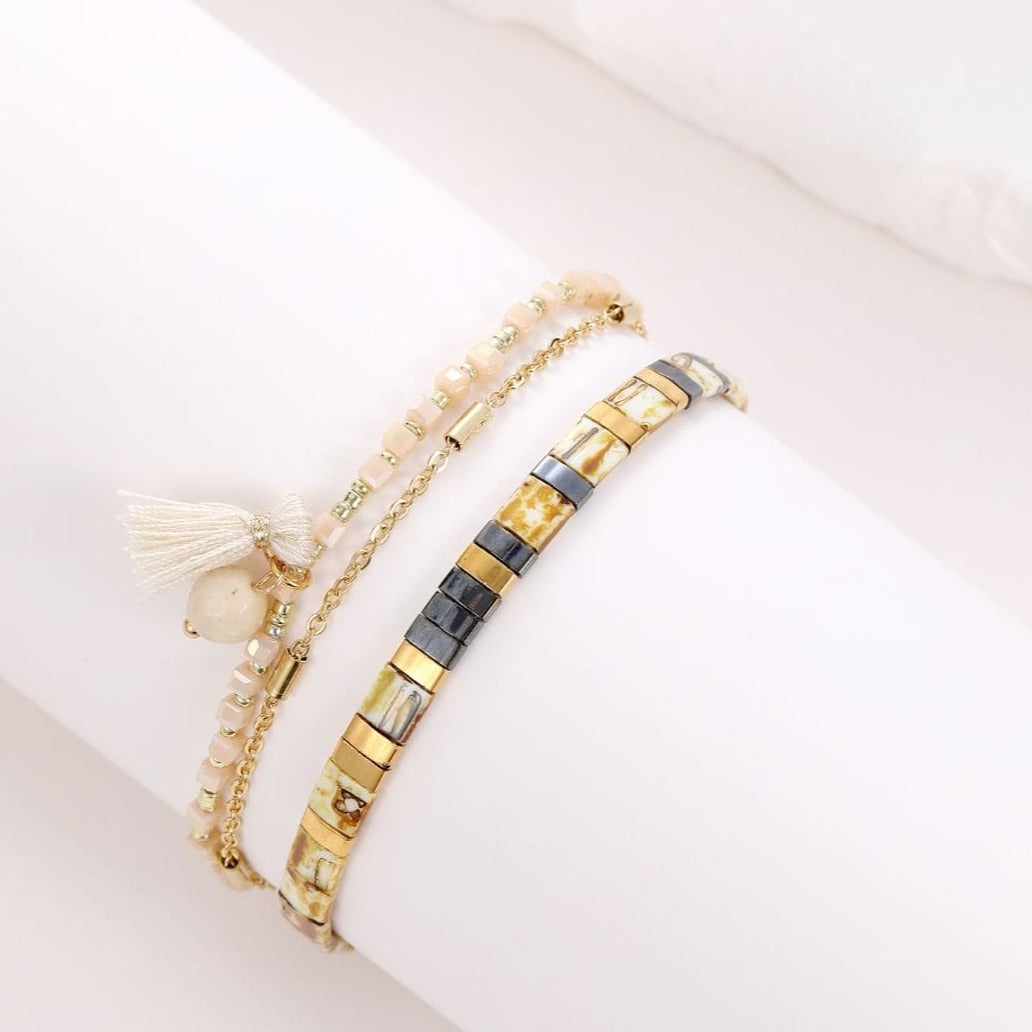
You use real gold-plated glass rather than yellow paint. Miyuki (official), the Hiroshima bead maker founded in 1949, produces precision glass beads plated in 24k gold, and that warm metallic surface reads like citrine in low November light. Our Or bracelet is built entirely on these 24k gold-plated Miyuki beads, and it was one of the 10 best-selling single bracelets on kossdesign.com last November, with more than 230 sold that month. For a softer citrine, our studio alternates gold-plated beads with translucent honey and amber glass, so the strand glows rather than glitters. The plating sits on precision-cut glass, so the bracelet keeps its shape on a soft elastic cord and can be worn daily; our Miyuki care guide covers how to keep that gold bright.
Which topaz shades work best in a bead bracelet?
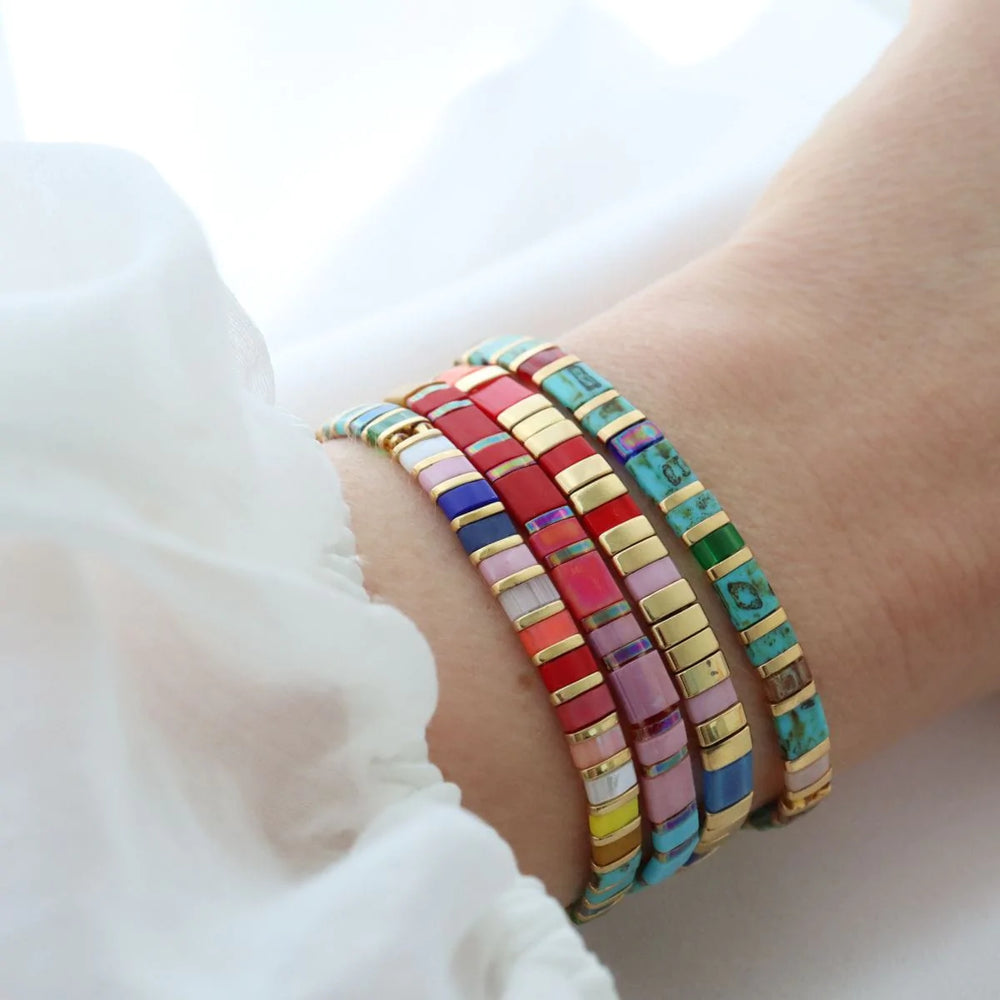
Imperial topaz and blue topaz are the two that translate most convincingly. Imperial topaz, the pinkish-orange variety that GIA (2026) links to Ouro Preto in Brazil and to the Russian court, becomes a peach-to-apricot mix of glass beads that flatters almost every skin tone. Blue topaz, which GIA notes is almost always colourless topaz permanently treated to turn blue, gives November a cool, wintry option and pairs well with silver tones. Our Tila bead bracelet collection is the natural home for topaz looks: the flat, two-hole Tila bead catches light on its faces, much like a cut gemstone, where round seed beads give a softer, even sheen. Our rule in the Paris studio is simple: choose Imperial peach if the wearer loves gold, blue topaz if she or he lives in silver.
How do you style topaz and citrine bracelets in November?
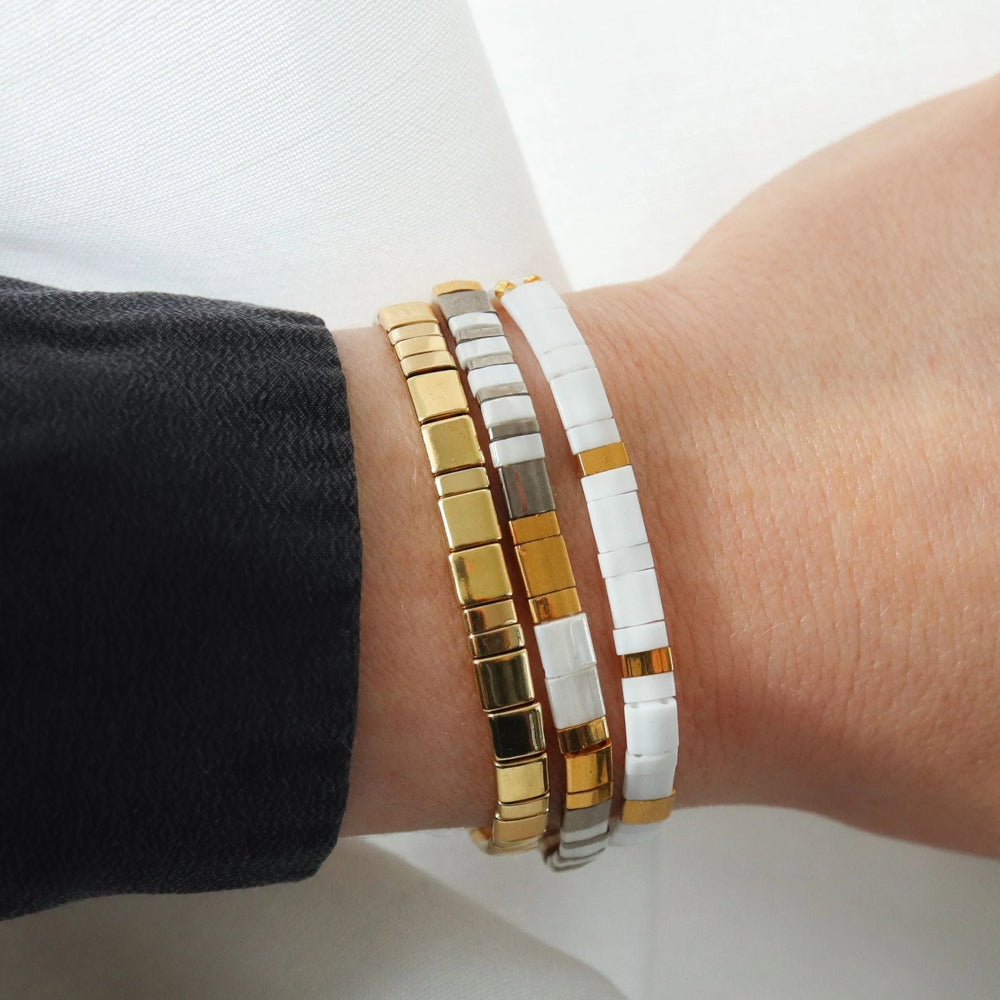
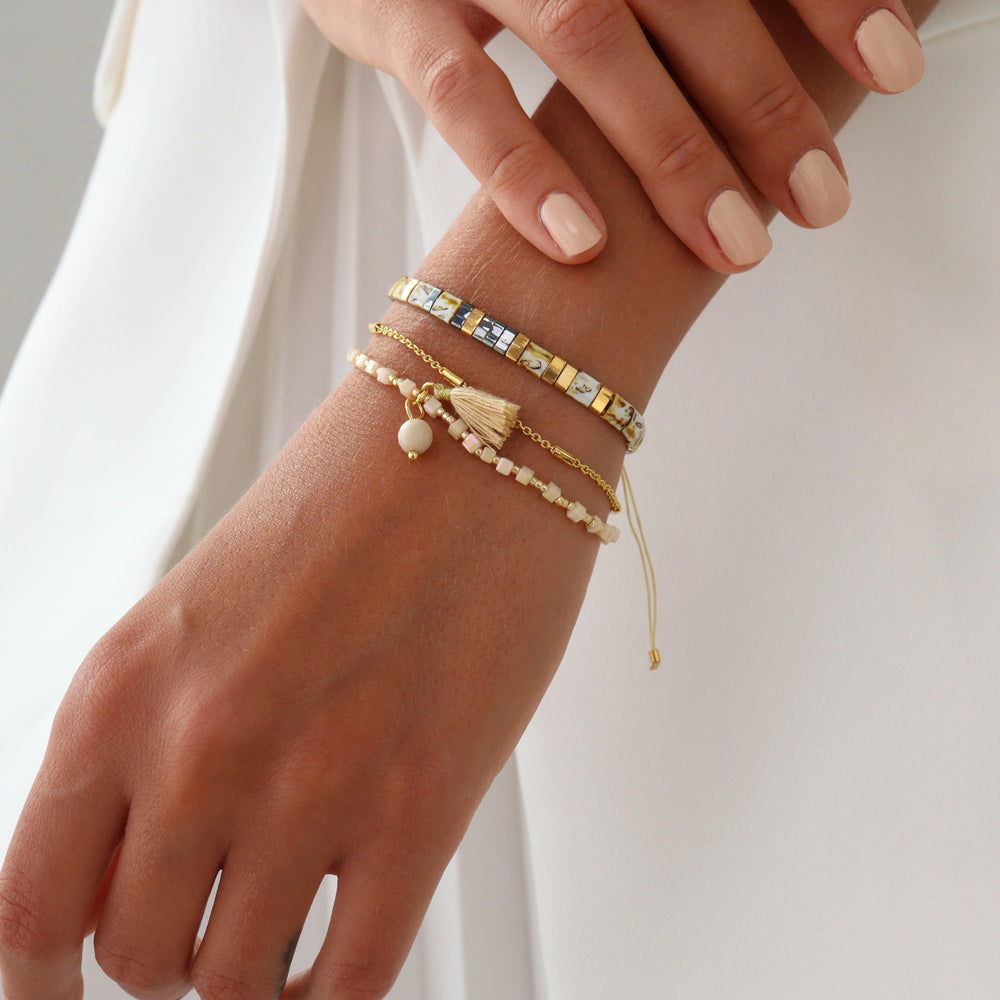
Build a three-piece stack around one gold anchor. Start with a citrine-gold bracelet, add a neutral cream or ivory strand, then finish with one topaz accent in peach or ice blue. Ivory is a timely bridge: Pantone named Cloud Dancer, a soft white, its Colour of the Year 2026, and it sits between warm citrine and cool topaz without clashing. Odd numbers look intentional, a principle we explain in detail in our guide to stacking beaded bracelets. Wear the stack over a thin cuff of camel or charcoal knit, where gold reads richest. Keep metals in one family across the wrist so colour stays the hero. If you want proven combinations rather than building from scratch, our best-sellers show the golden pieces customers buy most as the evenings draw in.
What do November shoppers buy, and what suits Scorpio or Sagittarius?
They buy sets. In November 2025, 18 of our 40 best-selling pieces on kossdesign.com were multi-bracelet sets, accounting for about 51% of the units in that top 40, and our three best-sellers that month were all sets. Gold is the thread: the Sun Set, which pairs gold, white and silver tones, sold more than 220 units. The month also covers two zodiac signs, Scorpio (until about November 21) and Sagittarius (from about November 22), so a birthstone bracelet doubles as a birthday gift. For Scorpio, we lean deep cognac citrine and amber; for Sagittarius, brighter Imperial peach and blue topaz. Our gift sets arrive as a ready-made stack, which removes the guesswork. For party styling once December arrives, see our holiday party jewelry guide.
Frequently Asked Questions
What are the birthstones for November?
November has two birthstones: topaz and citrine. Topaz was the original November stone on the 1912 American birthstone list, and citrine was added in 1952. Topaz comes in many colours, from blue to Imperial pinkish orange, while citrine is a yellow to brownish-orange quartz. For bead jewelry, the pair translates into warm gold, amber and peach tones, with blue topaz as a cooler alternative for silver lovers.
What color is the November birthstone?
The classic November colour is golden yellow to orange, shared by citrine and yellow or Imperial topaz. Topaz also comes in blue, pink and colourless varieties, so November is more flexible than most months. At Koss Design, we interpret November with 24k gold-plated Miyuki beads for citrine, and peach, apricot and ice-blue glass for topaz, which lets you choose a warm or cool version of the same birthstone.
Is topaz or citrine better for a bracelet gift?
Choose citrine tones if the recipient wears gold and likes warm, everyday colours; choose topaz if you want variety, especially blue topaz for someone who prefers silver. Many gift-givers simply combine both. In November 2025, about half of the units among our 40 best-selling pieces were sets, which shows how often customers prefer a ready-made combination over a single bracelet when shopping for someone else.
Which November birthstone suits a Scorpio or a Sagittarius?
Scorpios, born until about November 21, suit the deeper end of the palette: cognac citrine, amber and dark honey glass. Sagittarians, born from about November 22, suit brighter tones such as Imperial peach topaz and ice-blue topaz. Because both signs share the same birthstones, a Koss Design gift set mixing a gold citrine strand with a topaz accent works for either birthday.
Do gold-plated Miyuki beads tarnish?
Miyuki's 24k gold-plated beads are plated glass, so they keep their colour well with normal wear, but perfume, chlorine and long soaks wear down any plating faster. Put your bracelet on after perfume and lotion, take it off to swim, and store it flat away from humidity. With that routine, a citrine-gold Miyuki bead bracelet keeps its warm shine for everyday wear through many seasons.